

I've spent 15+ years working in, building, and growing creative teams. I've seen my fair share of problems. Some creep up every time; others land a right hook out of the blue.
About ~6 months ago I gave this starting your own business thing a run out, and since then I've been lucky enough to work with plenty of other creative teams of all shapes and sizes; different teams, same problems creeping up.
So I thought I'd share some of the stuff that always crops up and what we discussed or rolled out to tackle 'em.
In no particular order:
01 / 05
Why does everything take 4 rounds of amends?
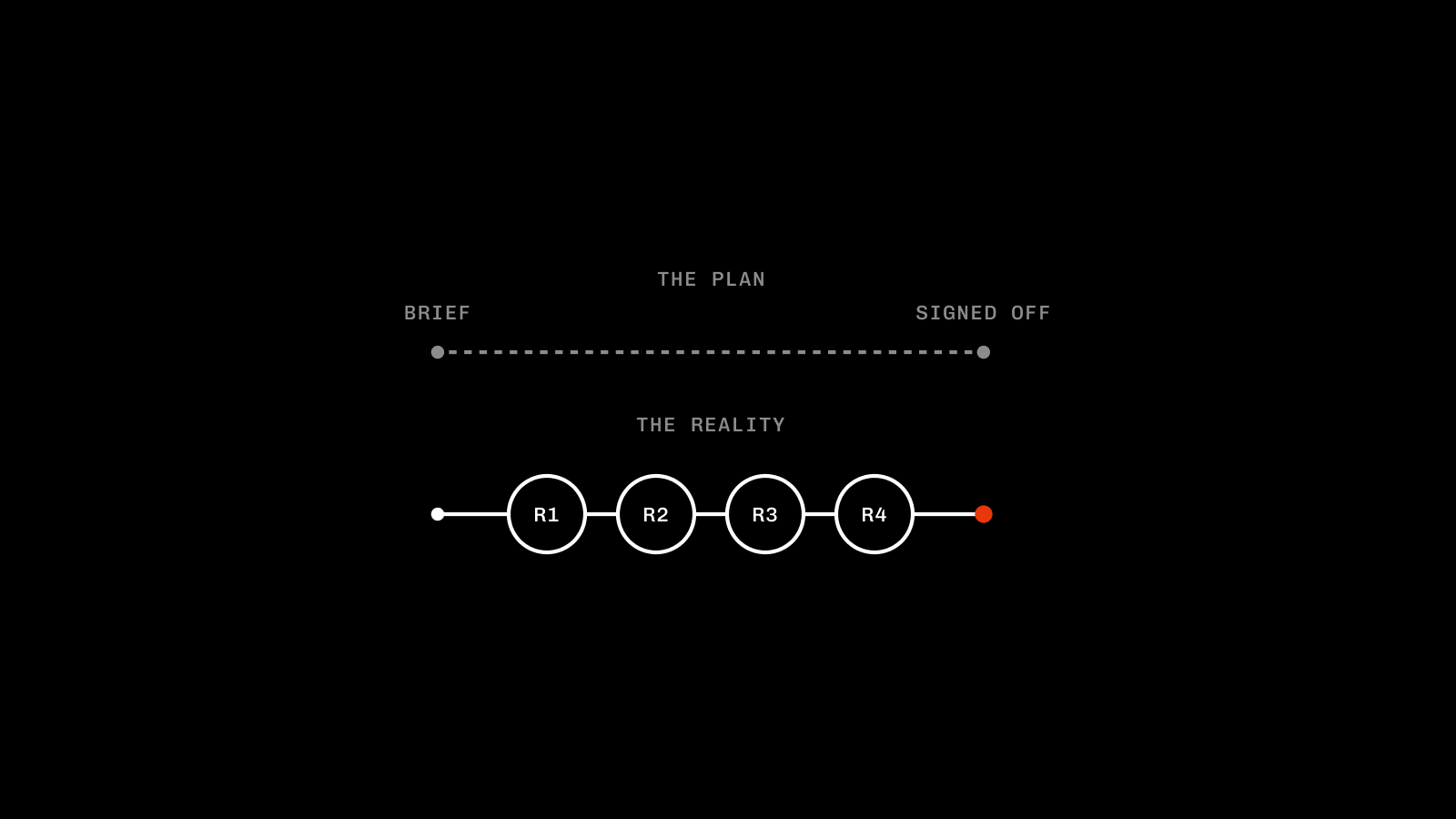
The age-old question, is it taste? Is it our people? Is it our clients? Is it our tech? Is it the weather?
I have this conversation over and over again, and everyone usually blames the execution, but more often than not it's everything around it.
Here's where to look:
The before bit
Does everyone know what great actually is and what it looks like? What about terrible? Or does it just live in one person's head?
Best practice for every media type should be well documented, easy to find and understand; bonus points if you have artboards or timelines setup so people can have a poke around.
I always push clients to have a page in their Figma dedicated to the above, this lives alongside brand guidelines and showcases the best-performing assets, stuff that gets signed off first time, and general design rules.
Newbies joining should be able to hop on a client and see exactly what gets signed off, what doesn't and most importantly what works.
Briefing
Most amends are written before anyone starts designing or editing. Your briefing templates should be clear, concise and easy to pick up and run with.
Here's a few things to think about:
Kill the vibes: anything subjective just leaves room for Human Error*, clear objectives, audience data and direction are the bare minimum.
Showcase recurring feedback: don't let people make the same mistake twice.
References, references, references: 2-3 examples of what you're trying to hit.
Sign-off process: who does it go to and when by?
Links: image libraries, previous templates, other ads that the client love.
Production
The amount of times I've seen people recreate things that were already created weeks before by someone else genuinely sends me west.
In performance marketing the same templates are used all the time. Rebuilding the same ad from scratch is the biggest time sink going, and every rebuild brings up feedback that's already been mentioned before.
Build a template library that everyone has access to, keep it updated weekly and kill some of the manual work. These can be global or specific to clients, both is probably smarter.
Quality Assurance
Make historic feedback visible to anyone who touches the account, there's nothing worse than a client dropping the 'as mentioned before' bomb. A page with previous feedback and an automated pre-flight check can save you that embarrassment.
Get a decent feedback tool. Video feedback over email? Probs gonna miss something, choose a tool with timestamped comments and it's much harder to miss.
Keep every client on the same review process if you can. A single process is easy to document and onboard new clients and team members. The more systems/processes you run, the muddier it gets.
Limit who's actually involved in the sign-off process, internally and externally. Any more than 2 people and it always gets stupid. It's a tougher conversation to have with the people paying, but once trust is gained there's no reason the CFO should be asking to make the logo bigger.
The less feedback coming in, the more time for the fun stuff.
All of the above can be measured pretty easily with basic automations, see 'How do we know if the creative team is actually doing well?' for a deeper dive.
02 / 05
How do we increase output without killing quality?
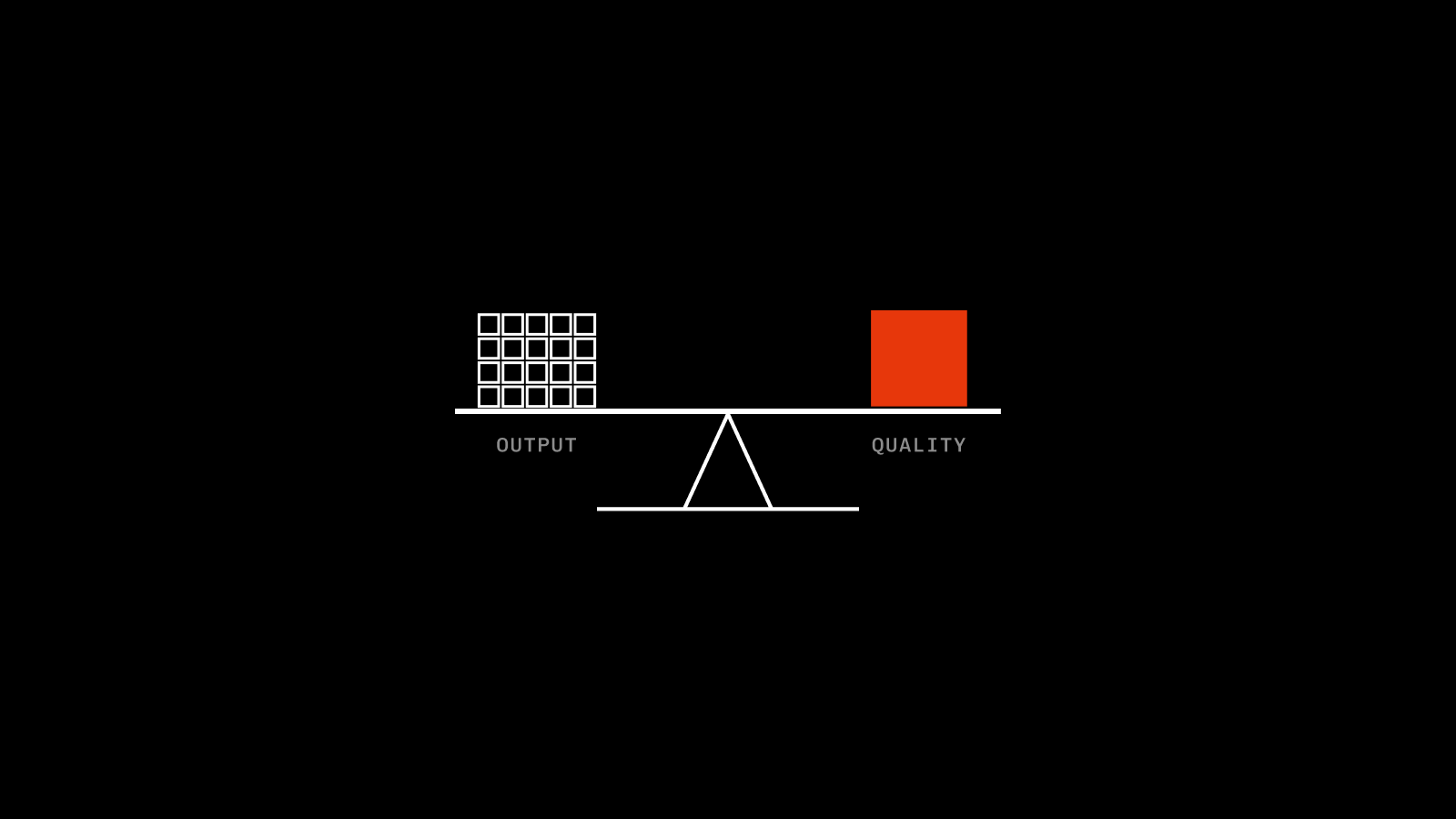
The market has changed a lot over the past couple of years, with volume still a big priority for a lot of teams. Is that the right approach? Probably not, but that's for an article of its own.
When volume is still a priority, most of it comes down to your systems surrounding production. The less time people spend stuck doing the same stuff, the more time left to work on the new, the rest boils down to leaning on automations/AI.
As Molly Mae courageously said, we've all got the same 24 hours as Beyoncé (well, 40 if we're talking work hours), so it's about removing the BS and getting the most bang for your buck in those hours.
Measure quality first
It's pretty pointless chasing high volumes of output when nothing's working in the ad account.
Understanding and tracking your hit rate (see question 3) is the key to success here, if output is going up but hit rate drops, you've killed quality.
If output is increasing and hit rate stays stable, you're quids in.
Build your production systems for scale
To achieve pace and volume to a high standard there's a few things that must be true:
Scheduling and traffic management are weeks ahead: if no one knows what's around the corner it's hard to be ahead of the game.
Briefs are easy to pick up and run with: every Slack message questioning a brief is time wasted.
Work is batched: briefing, production and reviews happen in batches vs one at a time, less context switching and fewer feedback loops.
You have a solid delivery system: templates, components, frameworks are all reusable.
Everyone knows what great actually is and looks like: if you're endlessly repeating the same stuff in R1 of feedback, look at how you can minimise it.
Your feedback rounds are clear/concise: people need to understand what they're changing AND why, this leaves room to develop and not repeat the same mistakes.
Most of the time, more quality output comes from people doing less of the same stuff over and over.
Less amends, less admin, less calls, etc all lead to more time working on fresh stuff.
When to use AI (and when not to)
"Can't we just use AI for this?" is a trending request. The key thing is knowing when to and when not to...
A good example of this is if you're using a basic AI prompt to produce briefs or assets and your clients are pushing back on quality constantly, you're probably an idiot.
In the same breath, if your senior designer is spending a week resizing ads for different placements when AI could do it in 5 minutes, you're also probably an idiot.
My view is simple, if the output meets the standards a human would hit, and is cheaper in credits than man-hours, automate it. If it's not, don't.
I see a lot of agencies joining the AI race to the bottom, churning out mediocre assets in the thousands.
Great thinking and taste are about to become hella expensive.
03 / 05
How do we know if the creative team is actually doing well?
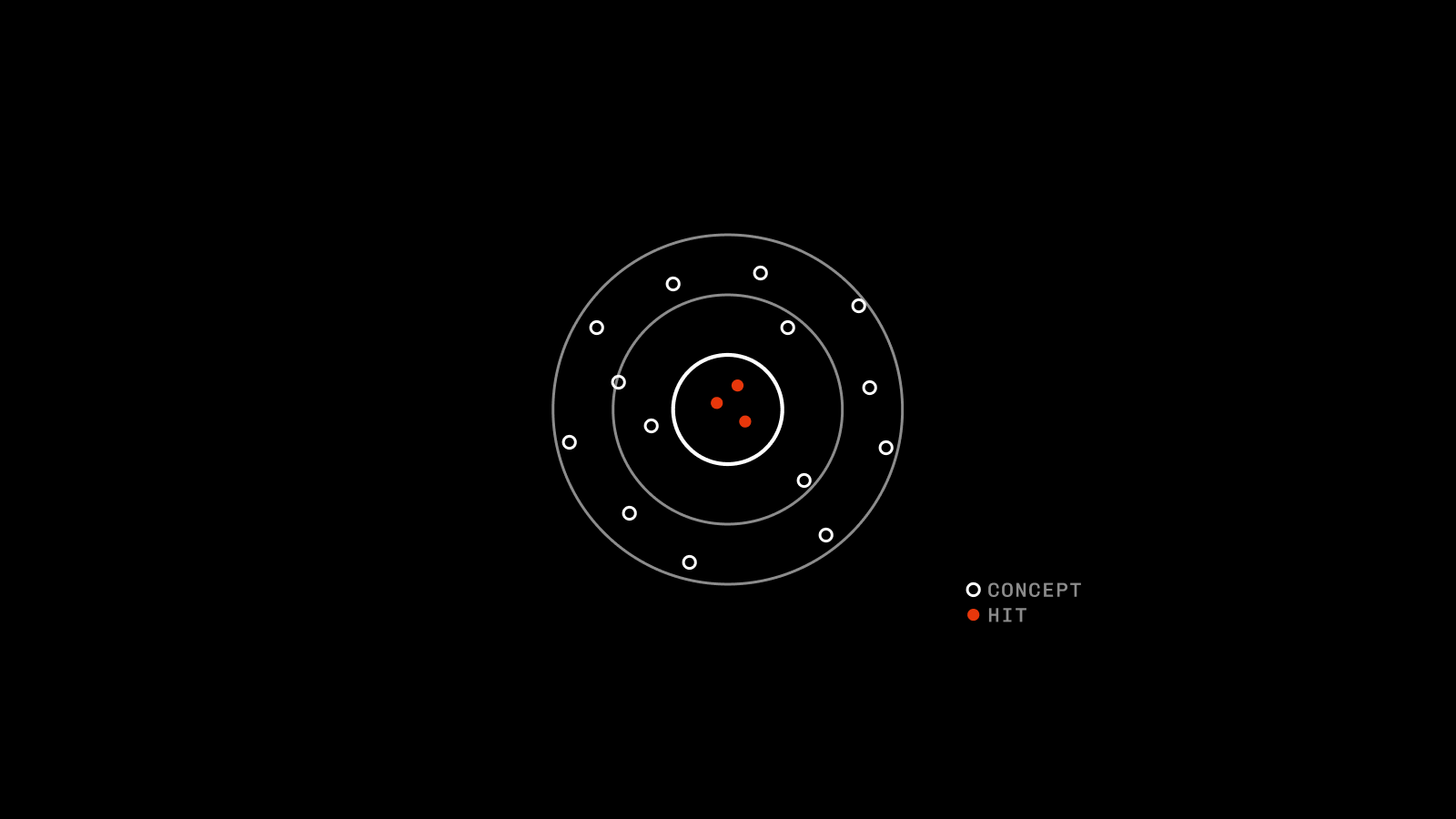
This one creeps up a lot; senior teams want success metrics but don't know where to start. It can change depending on your setup, but some things are pretty universal and can capture the efficiency of the production cycle.
For this section, assume a simple production flow like:
- Brief
- Production
- Feedback
- Amends
- Signed Off
Avg. time to sign off
Metric
Time from brief produced to finalised asset being signed off
This metric's decent because it marks the whole process.
It also brings real averages into the room, and shapes conversations at a team level vs an individual level (although you can also dive into individuals if you want).
Speed is more important than ever nowadays, and being able to understand how long an asset actually takes to produce gives you an advantage against the ever-annoying creative fatigue (bring back 2014 Facebook ads).
What good looks like is typically down to either your spend levels or your client requirements.
If you need to deliver X amount of creative per week, but your Avg. time to sign off is 7+ days, you'll always be chasing your tail. So I'd recommend diving into your numbers, and reverse-engineering it to fit.
Alongside this, you can also use 'Time in status' to spot bottlenecks:
If an asset sits awaiting feedback for weeks, your feedback process needs a look.
If production takes longer than expected, dig into your briefing and production flow; there's probably some stuff you can level up, or steps you can automate.
If amends cycles drag, there's probably too many cooks or the way feedback gets delivered isn't working.
These are the types of conversations you can start to have once the data starts to come in, without the numbers it's just a battle of opinions, and well, they never go too great.
Avg. number of amends
Metric
Number of amends rounds to get a signed off asset
The dream for any creative person is to upload their ads to whatever platform and everyone loves it, cheers, and it goes into the wild. In reality, this rarely happens.
This typically boils down to a few factors, and by tracking amends on an individual, client and global level, you can start to have proper conversations and make change off the back.
You can also either track this as a whole, or break it down into internal and external feedback rounds (if your sign-off is a client). The latter gives more insight, but can muddy the process if not managed properly.
Finding the correct number is again dependent on circumstance, but in my opinion anything over 1 round internally and 1-2 rounds externally should raise alarm bells.
Here are some typical spots:
If internal feedback rounds are high, I'd look at either briefing, how feedback is delivered or the person delivering.
If things are flying through internal feedback, but cycling externally this typically means that your briefs/delivery aren't aligned with client expectations.
If one client is consistently higher than the rest, look at who's signing off on their side, get them on a call and document/share key sticking points.
If your rounds are high across the board, it's probably not the people; it's the process.
If one format (e.g. video) spikes, explore tailoring briefs to formats.
A caveat to all of this, is 0 rounds isn't always good. It can mean things aren't being reviewed properly, but that's a story for a different day.
You can track this by tallying up every loop (Production → Feedback → Amends) that passes, and most project management platforms allow you to automate this pretty easily.
Hit Rate
Metric
% of concepts that achieve account benchmarks
I've left the obvious one till last, but probably the most important metric is hit rate, in short how many of the concepts produced actually work?
As an FYI, concepts should be looked at as a single idea/execution, not different sizes or basic text changes.
The first step to nailing this is understanding your benchmarks. These can be global if you're looking at TOF metrics, but should also be specific to acquisition targets and metrics.
You can look at industry reports or look at historic client data for TOF metrics; for acquisition targets, these need to align with what's gonna keep a client around.
Here are some typical red flags:
If one brief writer has a much lower hit rate than another, it's probably the briefs not the creatives.
If hit rate is low across one client, the angles you're chasing aren't right or the benchmarks are unrealistic.
If it's low everywhere, go back to the angles, not the execution.
You can automate this process if you have solid naming conventions across asset management platforms and ad platforms.
Again, this is something you can track on an individual, global and client level. A Google Sheet often does the trick; as long as you can reference brief writer, creative and client you can see what's landing.
E.g. Concept - Brief writer - Creative - Client - Angle - Offer (these can get much more complex)
04 / 05
Why does nobody know where anything's at?
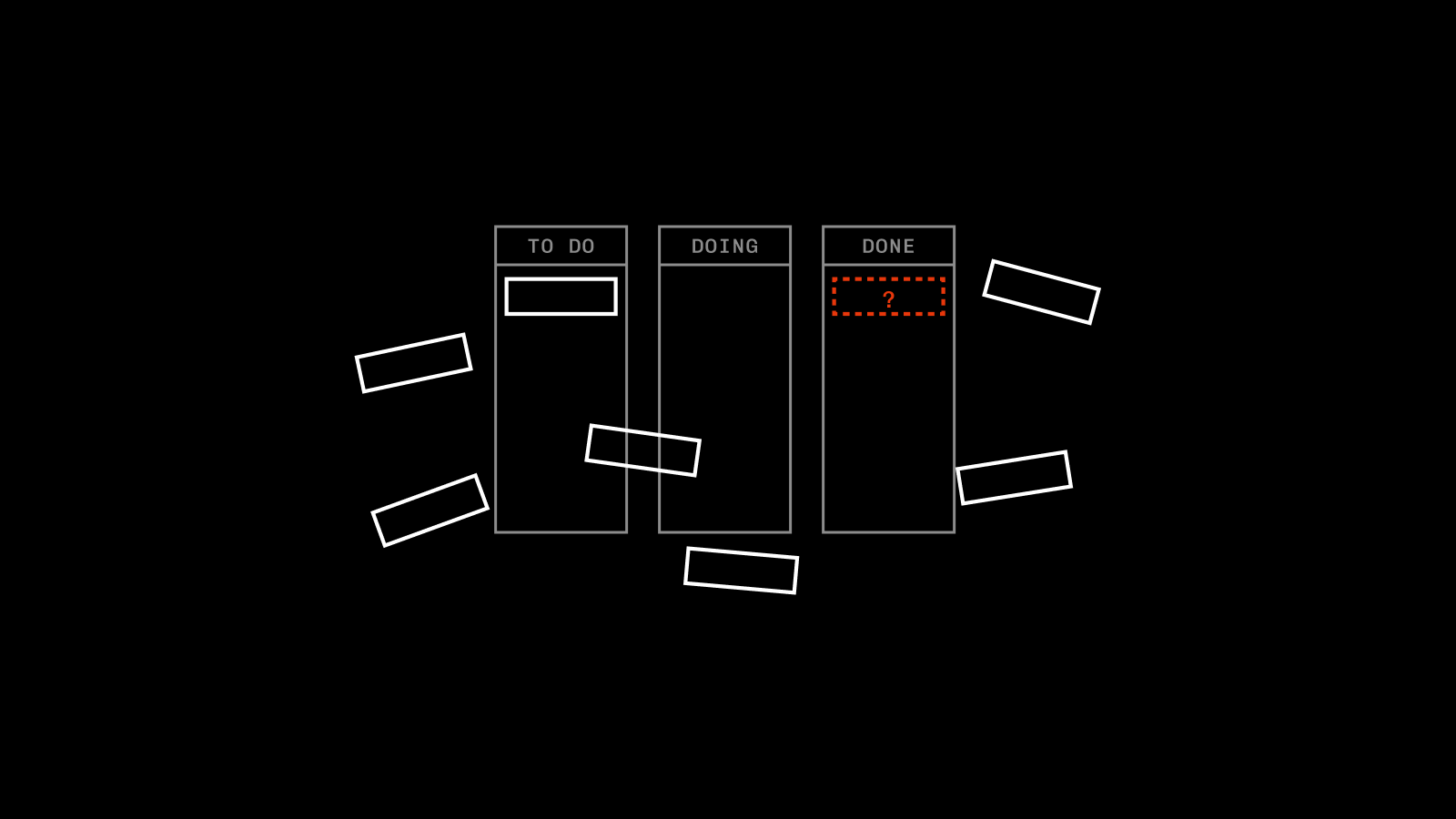
"Which project management tool is best for us" is what my sleep paralysis demon whispers to me most nights at 4am.
It comes up time and time again, and being honest most will do a decent job. It's the internal process and clear accountability that actually makes them tick. Some platforms just look a little sexier than others.
Here's key things to look for on a platform:
Custom fields and automations: can you track key business metrics in there as stuff ticks along?
Reporting: can everyone see what they need to, globally and at a client and individual level?
Capacity/utilisation: can you actually plan people's workloads in there?
Setup: can you map out and build projects easily?
Templates: can you copy/paste a set structure when a new client joins?
Here's what you need internally to make 'em tick:
Decent documentation: how does each team use it properly?
Accountability: who updates what, and when?
Automations: how can we track what we need to without manual work?
My picks are Notion or ClickUp. ClickUp scales better, Notion more user-friendly.
The best tool in the world won't work if nobody updates it.
05 / 05
When do we need to hire?
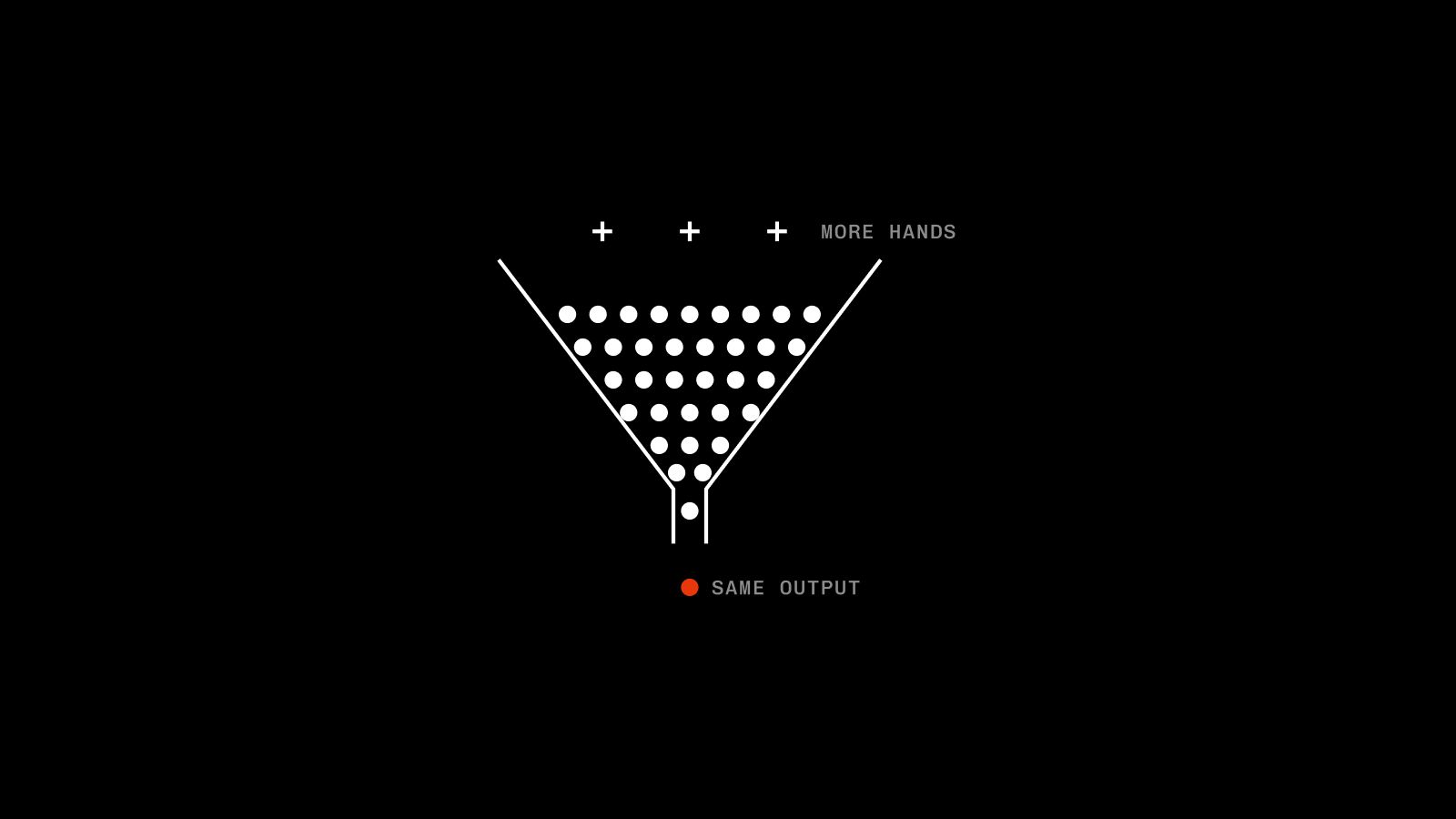
There's typically 2 ways to get a better understanding of this;
Track time
Estimate time
Tracking time is the most effective as you can get into the intricacies for clients, teams and individuals, but often pisses the most people off. The latter is less accurate but can still give you a pretty good outline.
I'm always favourable to the first, if rolled out correctly and adopted by managers and the team it can be a game changer, plus finance love it because you can start to actually project hires alongside pipeline.
Estimating is less accurate, but it's still better than a finger in the air, especially if you're just guessing anyway. The catch is getting accurate data if you work across multiple clients with different complexities. Nonetheless it starts to shape conversations around capacity and utilisation.
The maths is pretty simple either way, you need 3 things:
Number of contracted/required weekly deliverables
Avg. hands-on time to produce each type, amends included
Weekly workable hours across the team (actual production time, not paid hours)
E.g. 40 statics × 2hrs = 80 hours to clear.
If your team of two has ~70 workable hours in a week, you're 10 hours short, so you can hire, cut scope, or get quicker (see question 1).
If you made it this far, thanks for sticking about, I'm sure you're already 2% cleverer.